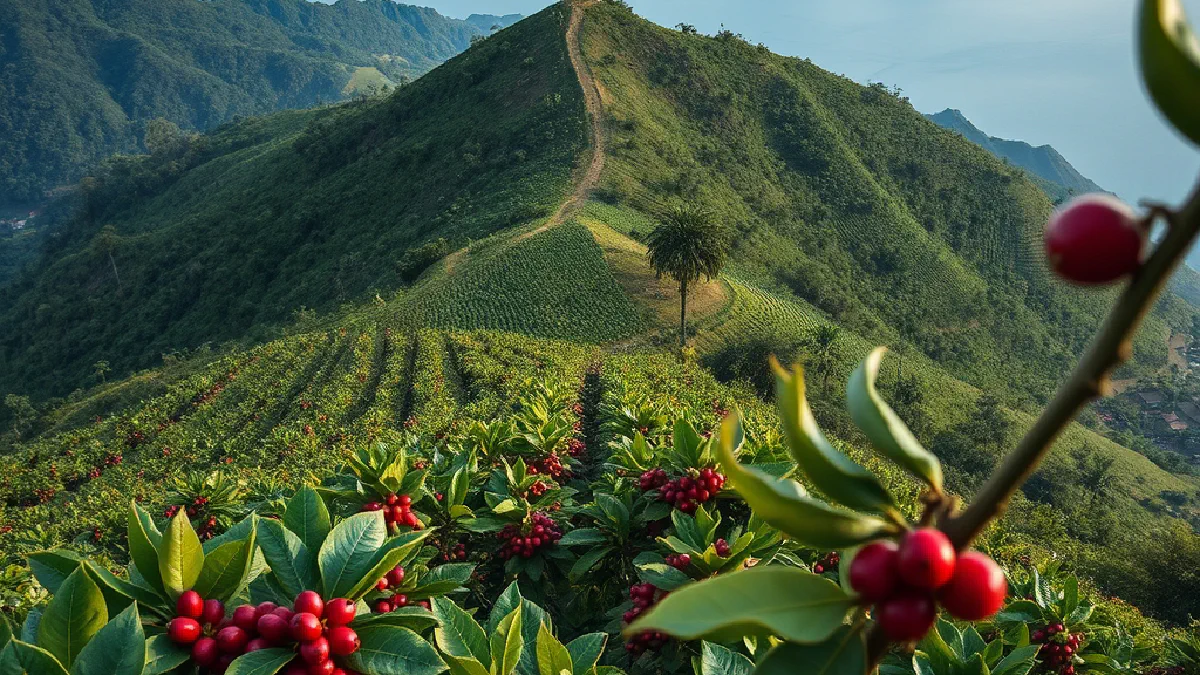
Two Countries, One Cup
Rwanda and Burundi sit side by side in the hills above Africa’s Great Lakes, and their coffee is close enough that most people taste them as one style: clean, sweet, gently bright, with red fruit and florals rather than the big blackcurrant punch of Kenya or the tea-like wildness of Ethiopia .
Three things explain why the two taste alike:
- Altitude. Both grow coffee roughly between 1,200 and 2,000 m, on steep volcanic hills.
- Variety. Both are overwhelmingly Bourbon, mostly the Red Bourbon selection, with some Caturra and hybrids mixed in. Bourbon is the variety that gives these coffees their sweetness — see our guide to Bourbon .
- Washing stations. Neither country is built on big estates. Hundreds of thousands of smallholders, most farming well under a hectare, carry their cherries to a shared washing station that pulps, ferments and dries the coffee. That station, not the farm, is usually the name on your bag.
At a Glance
| Rwanda | Burundi | |
|---|---|---|
| Main regions | Huye, Nyamasheke, Gisenyi, Ngororero, the Lake Kivu hills | Kayanza and Ngozi (Buyenzi), Kirimiro, Mumirwa |
| Altitude | About 1,200–2,000 m | About 1,100–2,000 m |
| Variety | Red Bourbon dominates | Bourbon dominates |
| Processing | Mostly washed , some natural | Mostly washed, some natural |
| Main harvest | Around March–June, with a smaller later pass | Around April–July |
| Typical cup | Red berries, orange, florals, clean finish | Floral, citric acidity, berries, silky body |
Sources differ by a month or two on harvest dates; treat them as a season, not a schedule.
Rwanda
Rwanda’s specialty industry is young. In 2002 the country had a couple of coffee washing stations; today it has several hundred, built out after the government shifted the sector from paying for quantity to paying for quality. In 2008 Rwanda became the first African country to host a Cup of Excellence competition, which put named Rwandan lots on roasters’ menus worldwide.
What you taste from that history is consistency. The washing-station model means careful cherry sorting and controlled fermentation, so a bag labelled “Rwanda” from a decent roaster is rarely a gamble. Huye and the hills along Lake Kivu are the names worth remembering.
Burundi
Burundi is the quieter neighbour: smaller, landlocked, with less marketing behind it, and often cheaper for the quality in the cup. Its best-known coffee comes from Kayanza and Ngozi provinces in the north, where washing stations like Gaharo and Bukeye have built their own reputations.
Because Burundi is less famous, it is one of the better value hunts in specialty coffee. If you like Rwanda, buy a Burundi next and compare them side by side.
The Potato Defect
This is the one thing to know before you buy, and it is nobody’s fault at the farm.
A small number of beans from this region can carry potato taste defect (PTD) — a bean that smells and tastes like raw potato. It is caused by a pyrazine compound that builds up after the cherry’s skin is broken, usually by the antestia bug, letting a bacterium (Pantoea coffeiphila) in. It happens on the tree, long before roasting, and it affects coffees from the Great Lakes region generally: Rwanda, Burundi, the DRC and Uganda.
A single affected bean in a grinder can scent a whole brew. The practical advice:
- Grind by the batch, and smell it. The defect is obvious in ground coffee and almost invisible in whole beans.
- If a cup smells of raw potato, dump it and grind again. One bad bean does not mean a bad bag.
- Buy from roasters who sort well. Good importers and roasters hand-sort for it; it is a known cost of working with the region.
It is uncommon in carefully sorted specialty lots, and it should not put you off — these are some of the sweetest washed coffees in the world.
How to Roast and Brew It
These coffees are usually offered as a light to light-medium roast, which is where the florals and red fruit live. Pushed dark, they lose the delicacy you paid for.
A pour-over starting point:
| Ratio | 1:16 (e.g. 18 g coffee to 290 g water) |
| Grind | Medium-fine, like table salt |
| Water | 94–96 °C / 200–205 °F |
| Total time | 2:45–3:15 |
Bloom with about twice the coffee’s weight in water for 40 seconds, then pour in two or three steady additions. Full method in our pour-over guide .
Tip: Let the cup cool for a few minutes before judging it. The florals and the red-fruit sweetness in these coffees show up well below serving temperature — it is a common reason people under-rate a good Rwanda on the first sip.
Your First Bag
Look for a washing station or cooperative name on the label (Gaharo, Bukeye, a Huye co-op), a washed process, and a roast date within the last three weeks — see freshness and storage .
Buy a Rwanda and a Burundi at the same time and brew them back to back. They are close enough that the differences teach you something, and the flavor wheel is a good crutch while you find the words. If you are not sure where to shop, start with our roaster buying guide .